
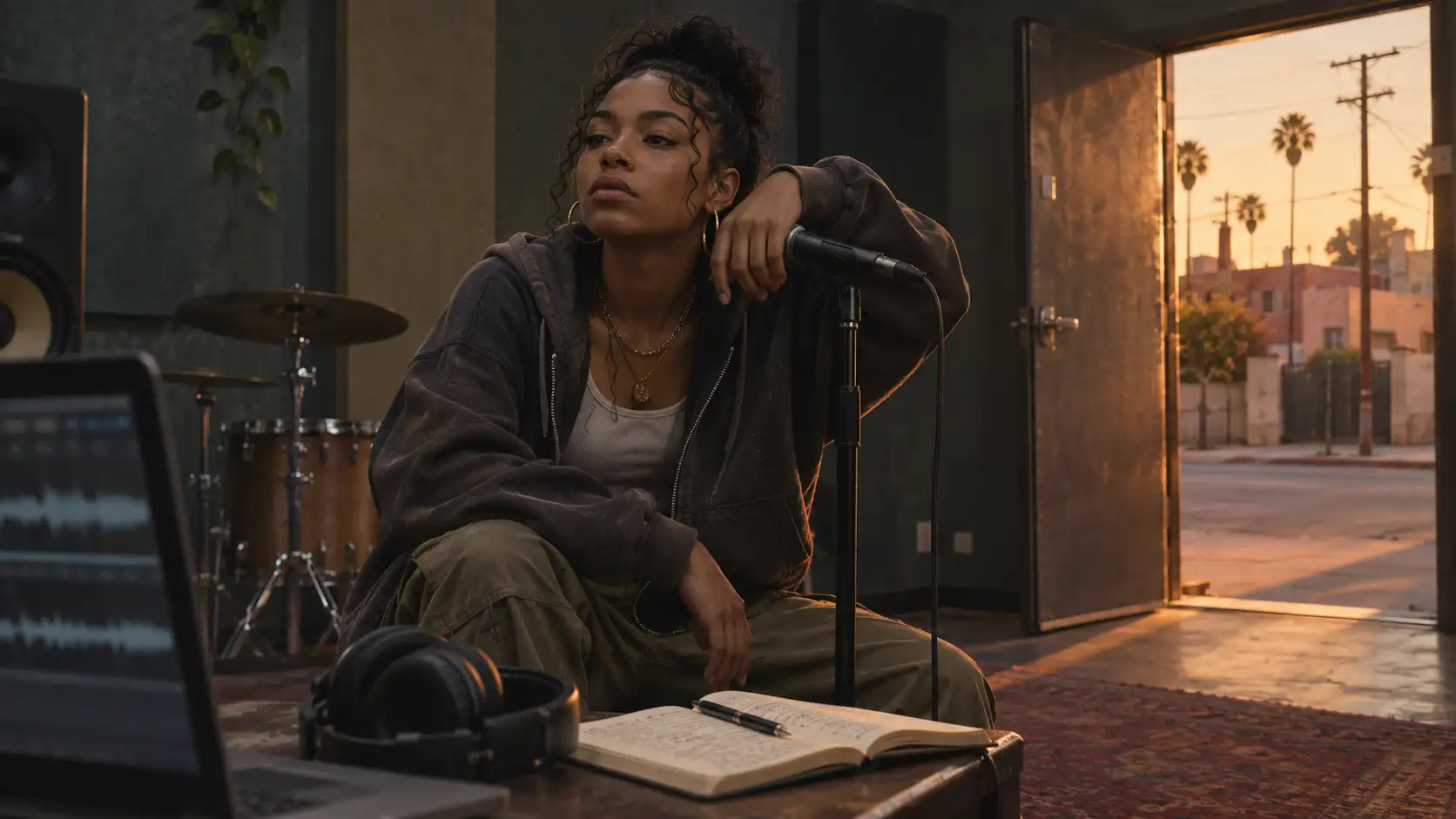
A guest verse can change the size of an artist’s audience in a few minutes.
It cannot tell that audience everything worth knowing.
The introduction may arrive through somebody else’s record, a familiar producer, or a performance clip shared far beyond its original setting. What follows is a different challenge: giving people a reason to return for the artist’s own work.
Los Angeles offers a compelling place to examine that transition.
Then: Look closely at the map
Even the phrase “Los Angeles rap” needs care.
A regional description can help listeners find connections, but it can also flatten meaningful differences. A neighborhood, an independent city within Los Angeles County, and the wider Southern California region are not interchangeable.
The details matter because artists often name the places that shaped their experiences. Coverage should preserve those distinctions rather than treating geography as decorative background.
It should show the same care with personal stories. A public image or a verse is not permission to invent somebody’s biography.
Now: What follows the introduction?
RapTV’s December 2025 discovery class includes AZ Chike, discussing the attention following his appearance on Kendrick Lamar’s GNX and his subsequent work. The profile provides a useful starting point for hearing an artist beyond the feature that introduced him to new listeners.
Another entry point is Can’t Get Right, the collaboration between Lefty Gunplay and JasonMartin. Pitchfork’s review considers its personal reflections alongside the musical partnership.
These examples raise a broader question: what does a larger audience actually hear after it learns a name?
Does it explore the catalog? Recognize collaborators? Hear emotional range? Or does it keep reducing the artist to one memorable moment?
Still building: Attention is only one resource
Visibility can create opportunities, but a working career requires practical support.
Artists need time to prepare performances, dependable collaborators, understandable agreements, and ways for interested listeners to find the next release. They also need enough creative room to make decisions that may not immediately reproduce a successful moment.
A career can become fragile when every release is treated as a referendum on whether an artist still deserves attention.
Our coverage should make room for development across several records, including imperfect ones that reveal an artist trying something difficult.
Next: Follow the artist’s direction
The most useful question after a major cosign is what the artist wants to build.
That answer might involve a stronger live show, a more personal project, a local collaboration, or a release that challenges the expectations of a new audience.
There is no single correct path.
The responsibility of the listener is simpler: stay curious long enough to hear more than the introduction.
Los Angeles contains more stories than any one spotlight can hold. The next chapter becomes clearer when we follow artists into the work they choose for themselves.
Which Los Angeles-area artist made you explore beyond the first feature or viral clip? What kept you listening?
Leave a Reply