Tag: Independent Artistry

Coverage of creative development, working practices, and career decisions among artists building with varying degrees of independence.

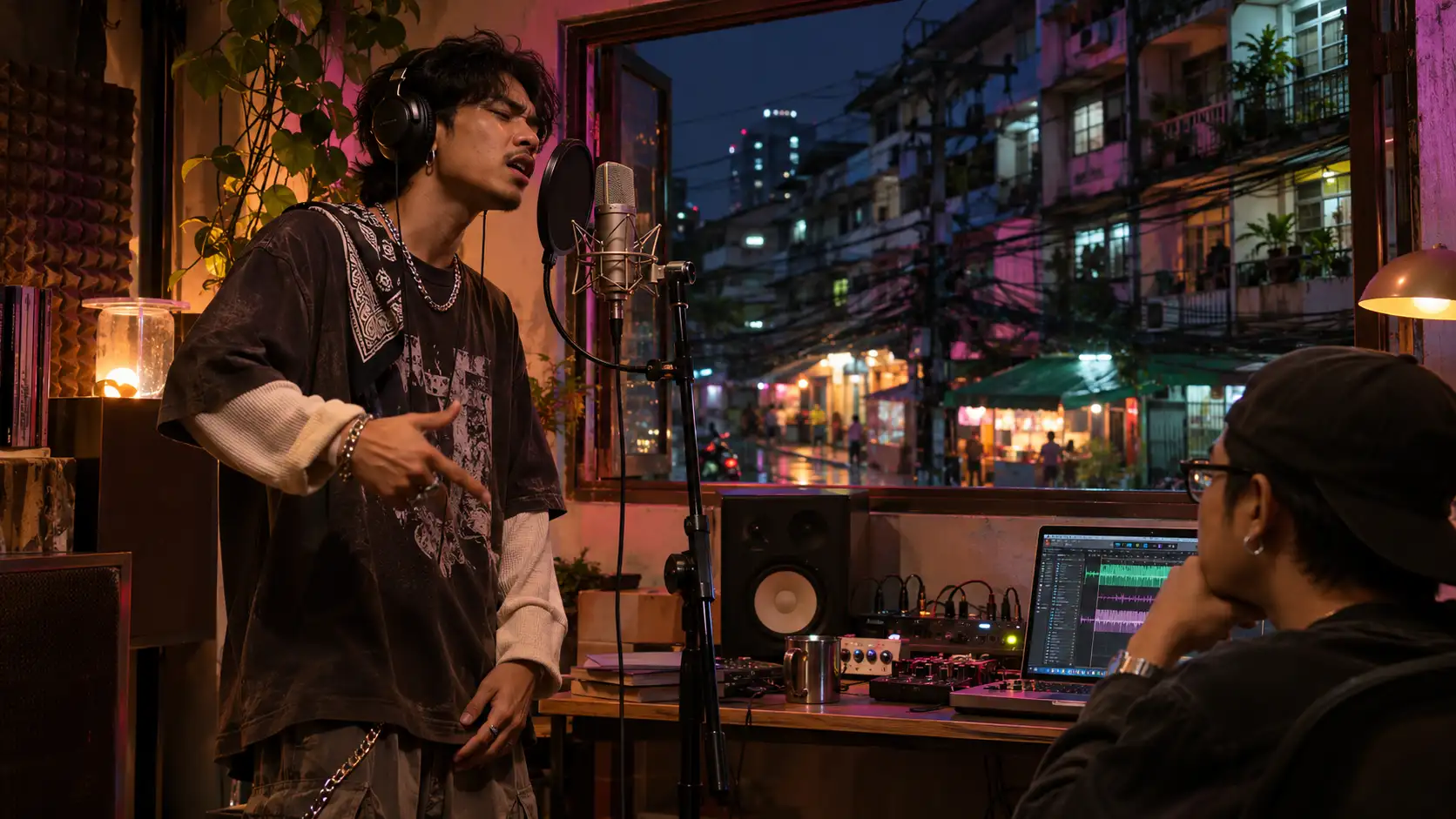
  • Bangkok Rap: Local Roots, Global Frequency

    Bangkok Rap: Local Roots, Global Frequency

    A listener can recognize a groove before understanding a word.

    That first connection is powerful. It is also incomplete.

    Cadence, tone, rhythm, and performance can bring somebody into a record across a language barrier. The meaning may require more patience: translation, context, and a willingness to learn what a familiar sound is doing somewhere unfamiliar.

    Bangkok gives The Rap Atlas an opportunity to practice that kind of listening.

    Then: Leave room for local history

    An international introduction to rap can easily become a story about American influence arriving somewhere else.

    That approach misses the decisions made by local artists.

    A musical form travels, but the people receiving it bring their own language, listening habits, traditions, ambitions, and disagreements. Understanding the result requires attention to those choices.

    It also requires geographic precision. Bangkok is not interchangeable with Thailand. An artist working elsewhere in the country belongs to a story that deserves its own location and context.

    This article begins with one documented Bangkok artist rather than pretending one feature can explain an entire national scene.

    Now: An entry point through Réjizz

    Marshall Records describes Bangkok-born rapper, singer, and producer Réjizz as developing a Thai-Funk sound that brings jazz phrasing, soul textures, and Mo Lam rhythms into hip-hop and R&B.

    Its profile also describes his movement between Thai and English and his early participation in Bangkok’s underground scene.

    That combination offers something specific to hear.

    The interesting question is how those elements work together: where a rhythm changes the feeling of a verse, how language affects phrasing, and what happens when a familiar genre creates space for different musical references.

    One artist cannot stand in for every Bangkok rapper. His work can open a door into more careful discovery.

    Still building: Recognition needs context

    For listeners outside Thailand, English-language coverage provides an accessible starting point. It can also limit what becomes visible.

    Artists with international publicity may be easier to find than performers whose strongest connections are local. That difference in discoverability should never be mistaken for a complete measure of artistic importance.

    Responsible coverage needs local sources and informed translation. When interpretation remains uncertain, the honest response is to acknowledge the limit rather than decorate it with assumptions.

    The same principle applies to lyrics: performance is something to interpret carefully, not automatic evidence of a private life.

    Next: Connection without erasure

    A compelling future for rap across borders allows artists to reach wider audiences while choosing how much to translate, explain, or adapt.

    Some may pursue collaborations across languages. Others may concentrate on the people who already understand every reference. Both are legitimate creative directions.

    Bangkok’s place in this atlas begins with curiosity and a specific listening invitation. The next stage should deepen that understanding through more voices, including people describing the scene in their own terms.

    When a rap record reaches you across a language barrier, what makes you stay—and what do you want to understand next?
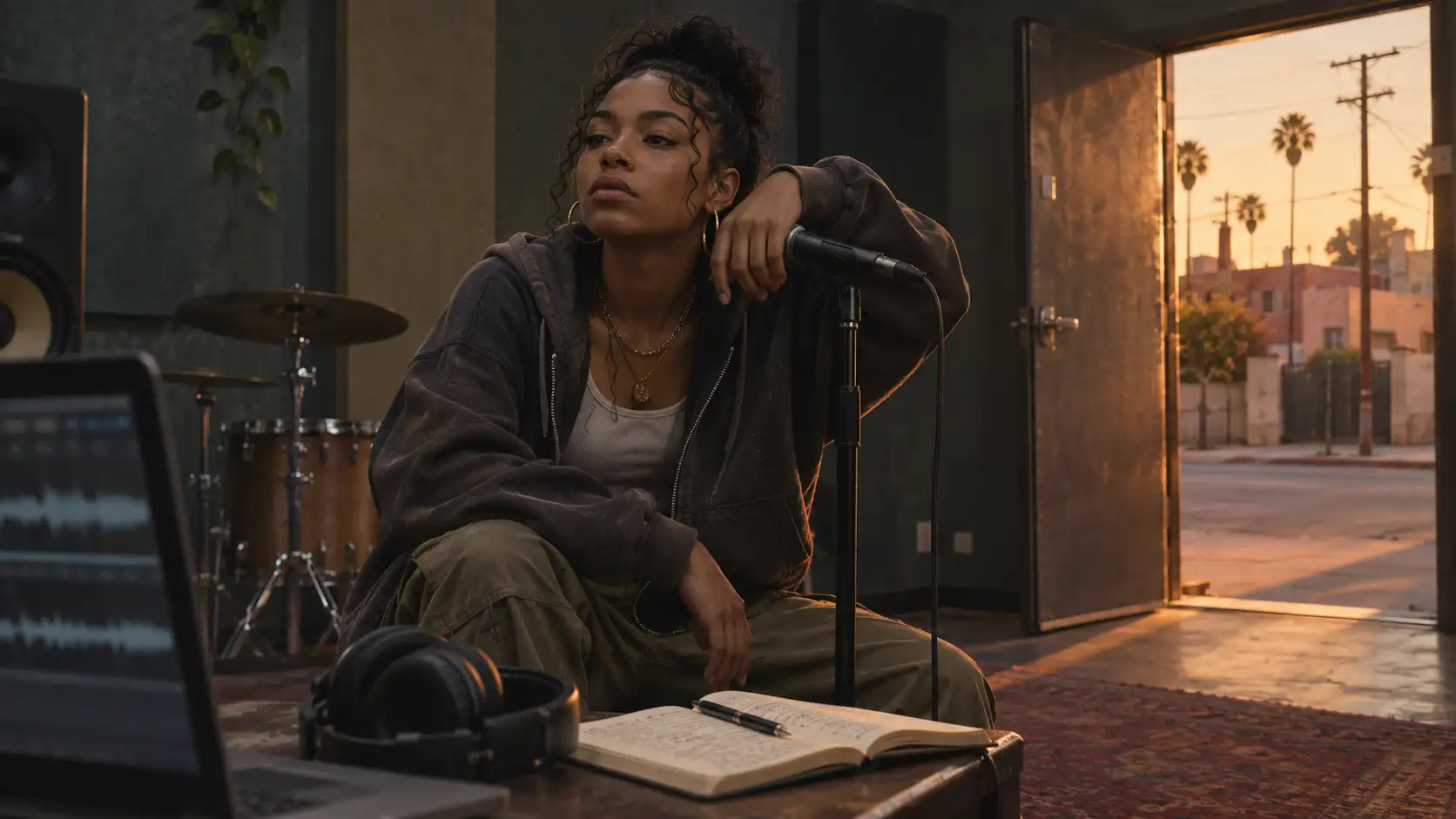
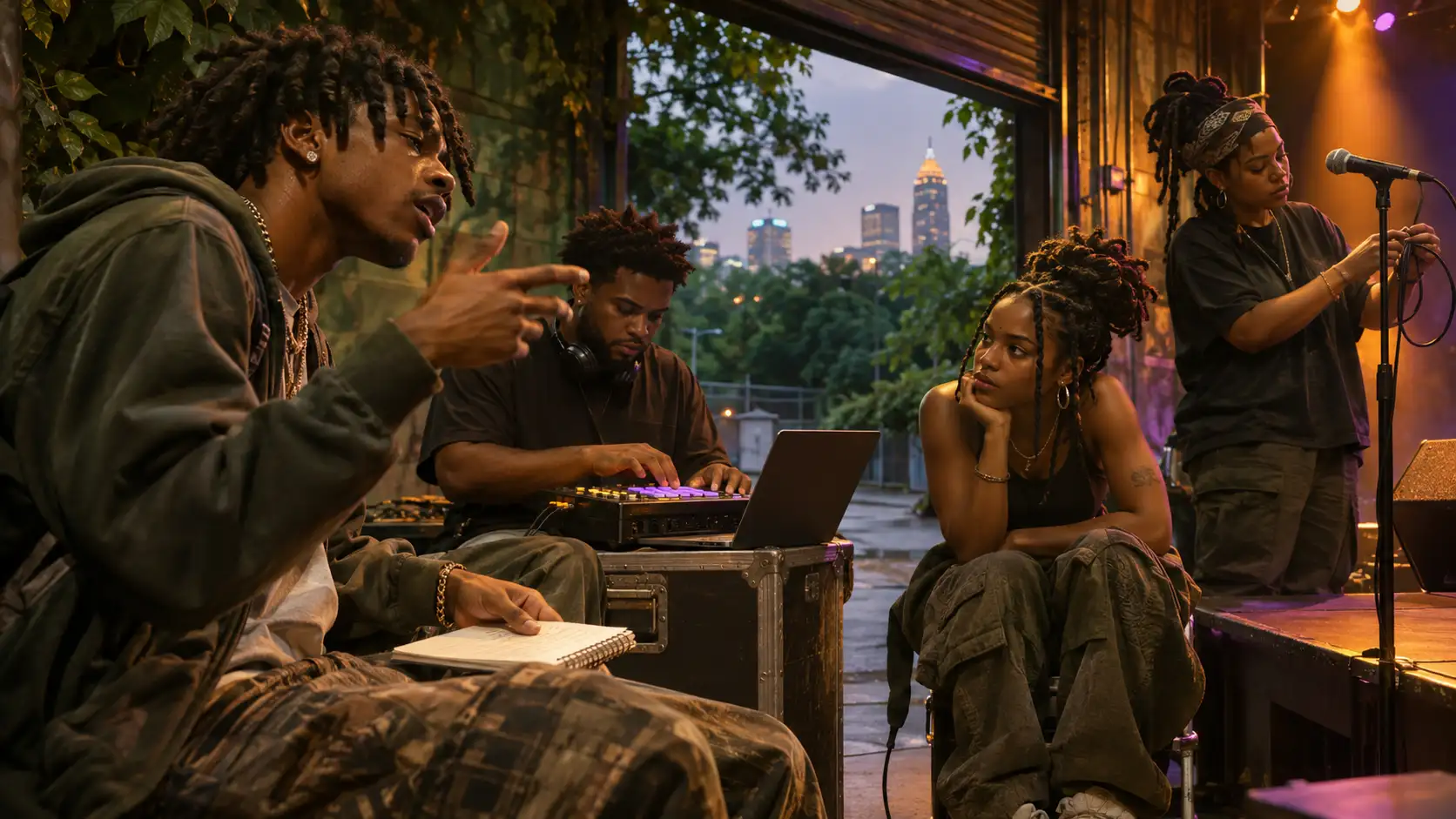
  • Los Angeles Rap: Beyond the Cosign

    Los Angeles Rap: Beyond the Cosign

    A guest verse can change the size of an artist’s audience in a few minutes.

    It cannot tell that audience everything worth knowing.

    The introduction may arrive through somebody else’s record, a familiar producer, or a performance clip shared far beyond its original setting. What follows is a different challenge: giving people a reason to return for the artist’s own work.

    Los Angeles offers a compelling place to examine that transition.

    Then: Look closely at the map

    Even the phrase “Los Angeles rap” needs care.

    A regional description can help listeners find connections, but it can also flatten meaningful differences. A neighborhood, an independent city within Los Angeles County, and the wider Southern California region are not interchangeable.

    The details matter because artists often name the places that shaped their experiences. Coverage should preserve those distinctions rather than treating geography as decorative background.

    It should show the same care with personal stories. A public image or a verse is not permission to invent somebody’s biography.

    Now: What follows the introduction?

    RapTV’s December 2025 discovery class includes AZ Chike, discussing the attention following his appearance on Kendrick Lamar’s GNX and his subsequent work. The profile provides a useful starting point for hearing an artist beyond the feature that introduced him to new listeners.

    Another entry point is Can’t Get Right, the collaboration between Lefty Gunplay and JasonMartin. Pitchfork’s review considers its personal reflections alongside the musical partnership.

    These examples raise a broader question: what does a larger audience actually hear after it learns a name?

    Does it explore the catalog? Recognize collaborators? Hear emotional range? Or does it keep reducing the artist to one memorable moment?

    Still building: Attention is only one resource

    Visibility can create opportunities, but a working career requires practical support.

    Artists need time to prepare performances, dependable collaborators, understandable agreements, and ways for interested listeners to find the next release. They also need enough creative room to make decisions that may not immediately reproduce a successful moment.

    A career can become fragile when every release is treated as a referendum on whether an artist still deserves attention.

    Our coverage should make room for development across several records, including imperfect ones that reveal an artist trying something difficult.

    Next: Follow the artist’s direction

    The most useful question after a major cosign is what the artist wants to build.

    That answer might involve a stronger live show, a more personal project, a local collaboration, or a release that challenges the expectations of a new audience.

    There is no single correct path.

    The responsibility of the listener is simpler: stay curious long enough to hear more than the introduction.

    Los Angeles contains more stories than any one spotlight can hold. The next chapter becomes clearer when we follow artists into the work they choose for themselves.

    Which Los Angeles-area artist made you explore beyond the first feature or viral clip? What kept you listening?

  • Atlanta Rap: Who Builds the Next Wave?

    Atlanta Rap: Who Builds the Next Wave?

    When people ask who is next in Atlanta, they usually expect an artist’s name.

    A more revealing answer might include a producer, a collective, a shared bill, and several people who keep appearing in one another’s work.

    Individual talent matters. So does the environment that gives it somewhere to develop.

    Atlanta’s next chapter becomes more interesting when we follow both.

    Then: Success creates an inheritance

    A city with a powerful musical reputation offers its younger artists an unusual inheritance.

    There are examples to study, established expectations, and listeners who arrive with an idea of what the city should sound like. That attention can open doors. It can also make experimentation harder when everybody is waiting to recognize the next version of something they already know.

    The challenge for an emerging artist is to draw from local history while developing a voice that can stand on its own.

    Now: Follow the connections

    A March 2026 Pigeons & Planes feature documents artists including Zukenee, Sk8star, Tezzus, and diamond*, exploring how their developing scene connects online releases with local performances and collaboration.

    The reporting identifies a range of influences rather than a single new formula. It also describes shows bringing several emerging acts onto the same bill.

    That is an important distinction. A shared location does not automatically create a movement. Repeated participation begins to reveal one.

    Who works together? Who introduces audiences to somebody else? Which producers help connect otherwise different approaches? Where does online interest turn into a room full of people?

    Those questions tell us something that a follower count cannot.

    Still building: Give development its time

    “New” often means newly visible.

    An artist can spend years recording before appearing in a discovery feature. By the time a wider audience hears a first recognizable song, there may already be a substantial history of abandoned ideas, small releases, and relationships behind it.

    That history matters because it changes how we understand momentum.

    A breakthrough can be an opportunity to build. It can also create pressure to repeat the first thing that worked before an artist has room to explore anything else.

    Our interest is in the choices made after attention arrives.

    Next: Can collaboration become lasting infrastructure?

    One possible future for a developing scene is stronger shared infrastructure: reliable live opportunities, clear working agreements, trusted production relationships, and audiences willing to explore beyond a single name.

    That outcome is not guaranteed by a cosign or a successful clip.

    It takes people continuing to show up for the work after the initial excitement passes. It also requires room for disagreement, individual direction, and artists who do not fit a collective’s dominant style.

    Atlanta’s next wave should be heard through its records. It should also be understood through the relationships making those records possible.

    Which Atlanta collaboration introduced you to an artist you now follow? Start with the song, then tell us who opened the door.

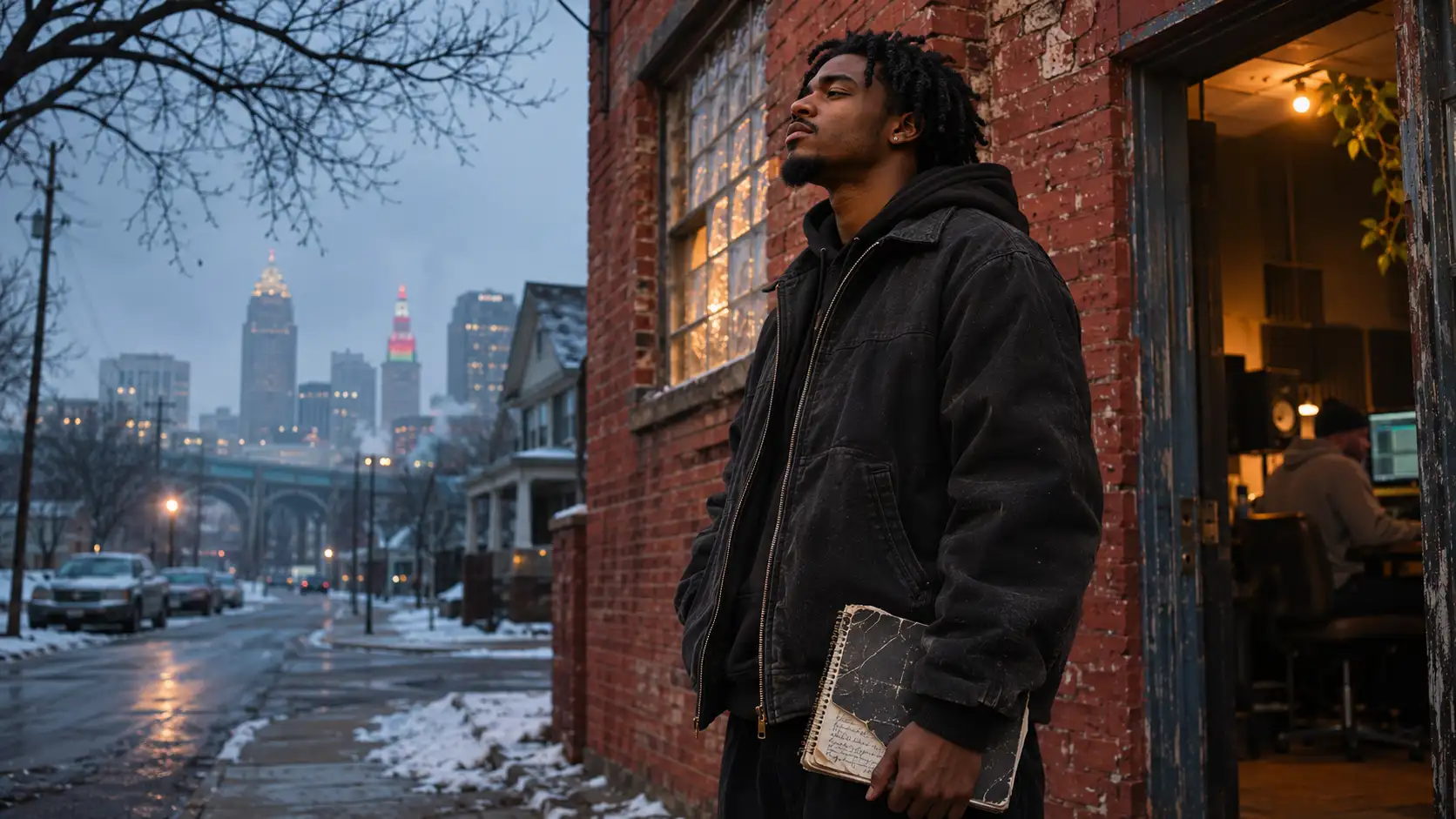
  • Cleveland Rap: The Sound Travels. The Story Stays.

    Cleveland Rap: The Sound Travels. The Story Stays.

    A city’s influence can become familiar long before its story does.

    Listeners recognize a melodic approach, a way of bending a phrase, or a voice moving between vulnerability and force. They may know the records without knowing much about the place behind them.

    Cleveland deserves a closer listen.

    Its rap history offers more than a supporting chapter between larger industry centers. It raises a question worth carrying into the present: what happens when artists make work that travels widely while the community that shaped it remains less visible?

    Then: Melody with its own character

    The Rock & Roll Hall of Fame traces Cleveland’s national rap visibility through M.C. Brains and the melodic, rapid-fire approach of Bone Thugs-N-Harmony. Its account also places Kid Cudi within a later development of melodic rap, incorporating alternative, electronic, and psychedelic influences.

    These artists offer different experiences of Cleveland’s creative reach. Their connection should not become a formula imposed on everyone who follows.

    A younger Cleveland rapper does not owe the city a Bone Thugs imitation. A singer-rapper does not need to reproduce Cudi’s emotional vocabulary. A meaningful legacy gives people something to work from and permission to move.

    Now: Listen beyond the familiar names

    Cleveland Magazine’s review of local releases from 2025 offers useful entry points. It highlights Kipp Stone’s I Ain’t Want Nothing and King Kalim’s Shadow Work, describing work grounded in lyricism, personal experience, and reflection.

    A different path appears in Cleveland Scene’s March 2026 profile of Princess Love. The article follows her development through local performances and a single reaching toward rock influences. Its value is in showing a working artist making decisions about sound and stage presence.

    These are listening invitations, not a definitive ranking. Together, they suggest why a scene deserves more than a single description.

    Still building: The work between releases

    An independent career contains stretches that rarely look dramatic from outside.

    There are rehearsals, unfinished verses, difficult mixes, small audiences, and the decision to return after a disappointing night. There are also relationships: the engineer who understands a delivery, the promoter who offers another slot, the listener who brings somebody new.

    Coverage should notice those contributions without romanticizing financial pressure or exhaustion.

    “Still grinding” can describe commitment. It should never become an excuse for expecting artists to work indefinitely without fair opportunities.

    Next: Build recognition that lasts

    For Cleveland, a useful future-facing question is how local recognition becomes durable support.

    That might mean better documentation, stronger connections between performers and producers, or listeners following an artist beyond one impressive clip. It also means remembering that Northeast Ohio contains distinct communities. Akron, East Cleveland, and Cleveland should not become interchangeable labels for convenience.

    The sound can travel. The people and places behind it deserve to remain part of the story.

    Which Cleveland-area artist has earned your attention through the work? Tell us what to hear—and what you hear in it.

  • The Rap Atlas: Every Scene Has a Story

    The Rap Atlas: Every Scene Has a Story

    Before a city becomes a sound, somebody has to make room for it.

    A DJ plays a record that other people have overlooked. A producer hears something in a voice that has not found its audience. A promoter puts an unfamiliar name on a flyer. A listener brings a friend to the next show.

    Those moments rarely appear in the headline when an artist finally breaks through. But they belong to the story.

    Welcome to The Rap Atlas: Roots. Streets. Next., RapStudio.One’s exploration of the places, people, and relationships that carry rap forward.

    Roots: How did we get here?

    Rap history is more than a list of successful recordings. It includes the circumstances that made those recordings possible: access to equipment, places to perform, neighborhood relationships, musical traditions, and people willing to try something unfamiliar.

    Cleveland’s melodic lineage offers one example. The Rock & Roll Hall of Fame’s account connects M.C. Brains, Bone Thugs-N-Harmony, and Kid Cudi through different approaches to melody and rap. Their work does not sound identical. The connection becomes interesting precisely because influence can change as it travels.

    That is how we intend to approach history: as something artists work with, question, and transform.

    Streets: What is happening now?

    The streets in this atlas include more than physical blocks. They include recording rooms, local stages, group chats, online releases, and the relationships moving between them.

    Our attention will extend beyond the most visible performer. We will follow producers, DJs, engineers, photographers, promoters, and listeners whose contributions help a scene hold together.

    We will also distinguish attention from longevity. A song can move quickly while a career develops slowly. An artist with a smaller audience may have built a meaningful, sustainable practice outside mainstream recognition.

    Both stories deserve room.

    Next: What could happen from here?

    The future of rap will be shaped by creative decisions and practical ones.

    Can artists reach their audience again after the first discovery? Can they afford to keep recording? Who controls the work? What happens when a collaboration connects two cities—or two languages?

    These questions give the series its direction.

    We begin with Cleveland, Atlanta, Los Angeles, Miami, Bangkok, New York City, and an introductory look across Great Britain. Each feature offers an entry point rather than a claim to represent every voice in a place.

    RapStudio.One’s role is to listen carefully, make useful connections, and leave room for people to describe their own work.

    Every scene has somebody who is already famous. Every scene also has somebody packing equipment after midnight, preparing another release, or helping the next artist get a first opportunity.

    We want to hear those stories too.

    Who is building your scene that more people should hear? Bring a name, a link, and a reason. The atlas starts there.