Tag: Rap Heritage

Stories examining earlier artists, recordings, practices, and institutions that help explain rap’s continuing development.

  • New York Rap: The Birthplace Keeps Moving

    New York Rap: The Birthplace Keeps Moving

    A powerful history can make people listen with expectations already in place.

    They know what greatness sounded like before. They know the records that changed their lives. When a younger artist arrives with different rhythms, different production, or a different idea of what a performance should feel like, the comparison begins immediately.

    New York rap lives inside that conversation.

    The question is whether listeners can carry their history with them while remaining curious about somebody else’s present.

    Then: Inheritance should create possibility

    Respect for earlier artists is essential to understanding rap. It helps explain techniques, relationships, and the circumstances behind important records.

    But history becomes less useful when it turns into a rigid job description for younger performers.

    An emerging New York artist may care deeply about lyricism without using a familiar delivery. Another may build a record around atmosphere, movement, humor, or emotional repetition.

    Those choices deserve to be heard on their own terms before being measured against an imagined standard for an entire city.

    Now: Hear the person inside the sound

    The FADER’s 2026 “New York Is” feature includes Bronx rapper yuke, discussing his independent development and the relationship between his emotionally difficult material and energetic production.

    That tension provides a useful way into unfamiliar music.

    A track that initially feels like pure energy may carry a different emotional intention. A rough vocal texture may be an expressive choice. Understanding what an artist says they are trying to do can change the listener’s interpretation without requiring agreement about whether the result succeeds.

    This is where close attention becomes valuable: hearing the sound, considering the stated intention, and keeping our own response distinct from both.

    Still building: Follow the places where discovery happens

    A scene needs ways for people to encounter work before it becomes widely recognized.

    That can happen through performances, independent releases, recommendations, and visual platforms. The FADER describes its own discovery process as connected to staff attending shows and comparing what they heard.

    There is a lesson in that ordinary practice.

    Discovery requires somebody to remain available to surprise. It also requires enough time to follow a promising introduction rather than immediately moving to the next name.

    The artist working through a developing catalog deserves more than an instant verdict based on a short clip.

    Next: Preserve the ability to experiment

    New York’s future can hold several musical directions at once.

    That possibility depends partly on audiences accepting that a city does not need one representative sound or one successor to an earlier generation. It also depends on practical opportunities for artists to perform, collaborate, and develop.

    An unfamiliar record may never become a personal favorite. It can still reveal something worth understanding about the people making and hearing it.

    The birthplace keeps moving because the people inside it keep making choices. Our job is to listen closely enough to notice what changed.

    Which newer New York artist made you reconsider what you thought the city should sound like?
  • Miami Rap: Beyond the Postcard

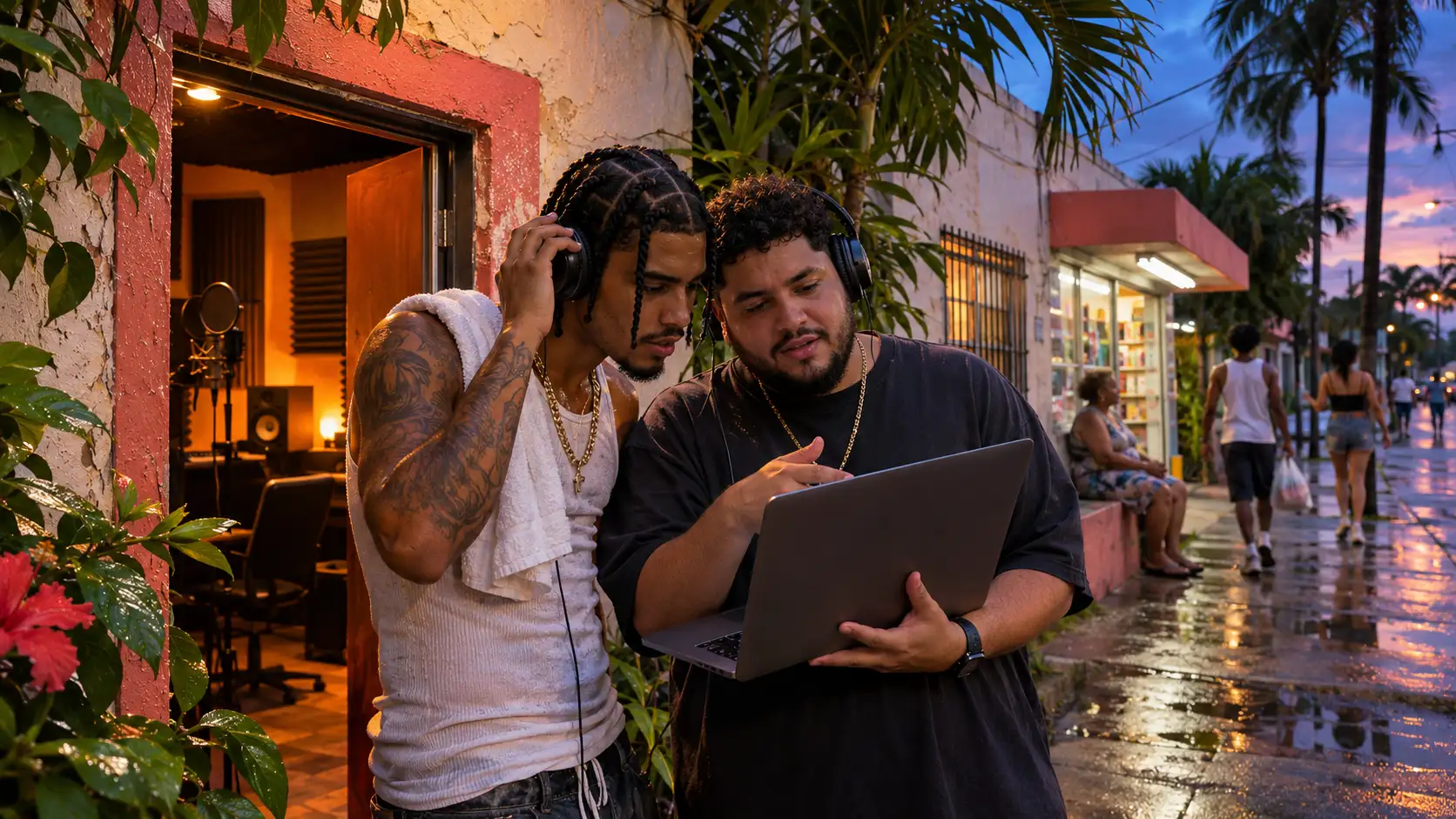
    Miami Rap: Beyond the Postcard

    A city can become so recognizable that people stop looking closely.

    Miami arrives with a ready-made visual vocabulary: waterfronts, nightlife, expensive cars, bright clothes, and the promise of somewhere else to be tonight.

    Those images belong to part of the city’s story. They cannot explain all the music made there.

    To hear Miami carefully, we need to follow the people whose work gives its neighborhoods a voice.

    Then: A history with several directions

    Miami New Times’ 2026 account of local hip-hop culture looks back through Miami bass, 2 Live Crew, Slip-N-Slide Records, Trick Daddy, Trina, Rick Ross, and DJ Khaled. It also discusses the later SoundCloud-era activity across South Florida.

    The regional distinction matters.

    South Florida is a useful frame for understanding connections, but it includes communities with their own histories. A Broward artist should not become a Miami artist simply because an outside publication wants a familiar label.

    Listening starts with getting the place right.

    Now: Begin with local discovery

    Hy-Lo News’s October 2026 “305 On The Rise” class offers a current entry point into artists working across Miami-Dade and Broward.

    Its selections include COOL SPITTA MOE, representing Little River and Little Haiti; Champolaa, representing Carol City; and Kyriq, representing Miami. Their submissions describe different creative priorities and connections to place.

    That variety deserves attention. The value of a local discovery feature is not that it settles who represents a city. It gives listeners somewhere specific to begin.

    The next step is to hear the work and allow those artists to be more than a geographic label.

    Still building: Who connects the room?

    Miami New Times’ 2026 recognition of Fat Jesu$ as Best Hip-Hop Act highlights production, collaborations, and advocacy for the local scene.

    That is a useful reminder that influence may operate through connections.

    A producer can help different voices find a shared audience. An organizer can create a bill that encourages listeners to arrive for one performer and discover three others. A visual creator can give a release a recognizable language without making every artist look the same.

    These contributions help explain how a scene continues between its headline moments.

    Next: Make discovery lead somewhere

    For an emerging artist, being heard once is a beginning.

    The practical question is whether a new listener can find the next show, understand the catalog, and stay connected between releases. A clear digital presence can support that relationship, but it needs work worth returning to.

    Miami’s future should have room for music that reflects celebration, pressure, humor, experimentation, and ordinary life—without requiring every artist to perform the city’s commercial image.

    The postcard can introduce a destination. The people making the music tell us why it matters.

    Who is making Miami music that reveals something you would never learn from a travel advertisement?

  • Cleveland Rap: The Sound Travels. The Story Stays.

    Cleveland Rap: The Sound Travels. The Story Stays.

    A city’s influence can become familiar long before its story does.

    Listeners recognize a melodic approach, a way of bending a phrase, or a voice moving between vulnerability and force. They may know the records without knowing much about the place behind them.

    Cleveland deserves a closer listen.

    Its rap history offers more than a supporting chapter between larger industry centers. It raises a question worth carrying into the present: what happens when artists make work that travels widely while the community that shaped it remains less visible?

    Then: Melody with its own character

    The Rock & Roll Hall of Fame traces Cleveland’s national rap visibility through M.C. Brains and the melodic, rapid-fire approach of Bone Thugs-N-Harmony. Its account also places Kid Cudi within a later development of melodic rap, incorporating alternative, electronic, and psychedelic influences.

    These artists offer different experiences of Cleveland’s creative reach. Their connection should not become a formula imposed on everyone who follows.

    A younger Cleveland rapper does not owe the city a Bone Thugs imitation. A singer-rapper does not need to reproduce Cudi’s emotional vocabulary. A meaningful legacy gives people something to work from and permission to move.

    Now: Listen beyond the familiar names

    Cleveland Magazine’s review of local releases from 2025 offers useful entry points. It highlights Kipp Stone’s I Ain’t Want Nothing and King Kalim’s Shadow Work, describing work grounded in lyricism, personal experience, and reflection.

    A different path appears in Cleveland Scene’s March 2026 profile of Princess Love. The article follows her development through local performances and a single reaching toward rock influences. Its value is in showing a working artist making decisions about sound and stage presence.

    These are listening invitations, not a definitive ranking. Together, they suggest why a scene deserves more than a single description.

    Still building: The work between releases

    An independent career contains stretches that rarely look dramatic from outside.

    There are rehearsals, unfinished verses, difficult mixes, small audiences, and the decision to return after a disappointing night. There are also relationships: the engineer who understands a delivery, the promoter who offers another slot, the listener who brings somebody new.

    Coverage should notice those contributions without romanticizing financial pressure or exhaustion.

    “Still grinding” can describe commitment. It should never become an excuse for expecting artists to work indefinitely without fair opportunities.

    Next: Build recognition that lasts

    For Cleveland, a useful future-facing question is how local recognition becomes durable support.

    That might mean better documentation, stronger connections between performers and producers, or listeners following an artist beyond one impressive clip. It also means remembering that Northeast Ohio contains distinct communities. Akron, East Cleveland, and Cleveland should not become interchangeable labels for convenience.

    The sound can travel. The people and places behind it deserve to remain part of the story.

    Which Cleveland-area artist has earned your attention through the work? Tell us what to hear—and what you hear in it.

  • The Rap Atlas: Every Scene Has a Story

    The Rap Atlas: Every Scene Has a Story

    Before a city becomes a sound, somebody has to make room for it.

    A DJ plays a record that other people have overlooked. A producer hears something in a voice that has not found its audience. A promoter puts an unfamiliar name on a flyer. A listener brings a friend to the next show.

    Those moments rarely appear in the headline when an artist finally breaks through. But they belong to the story.

    Welcome to The Rap Atlas: Roots. Streets. Next., RapStudio.One’s exploration of the places, people, and relationships that carry rap forward.

    Roots: How did we get here?

    Rap history is more than a list of successful recordings. It includes the circumstances that made those recordings possible: access to equipment, places to perform, neighborhood relationships, musical traditions, and people willing to try something unfamiliar.

    Cleveland’s melodic lineage offers one example. The Rock & Roll Hall of Fame’s account connects M.C. Brains, Bone Thugs-N-Harmony, and Kid Cudi through different approaches to melody and rap. Their work does not sound identical. The connection becomes interesting precisely because influence can change as it travels.

    That is how we intend to approach history: as something artists work with, question, and transform.

    Streets: What is happening now?

    The streets in this atlas include more than physical blocks. They include recording rooms, local stages, group chats, online releases, and the relationships moving between them.

    Our attention will extend beyond the most visible performer. We will follow producers, DJs, engineers, photographers, promoters, and listeners whose contributions help a scene hold together.

    We will also distinguish attention from longevity. A song can move quickly while a career develops slowly. An artist with a smaller audience may have built a meaningful, sustainable practice outside mainstream recognition.

    Both stories deserve room.

    Next: What could happen from here?

    The future of rap will be shaped by creative decisions and practical ones.

    Can artists reach their audience again after the first discovery? Can they afford to keep recording? Who controls the work? What happens when a collaboration connects two cities—or two languages?

    These questions give the series its direction.

    We begin with Cleveland, Atlanta, Los Angeles, Miami, Bangkok, New York City, and an introductory look across Great Britain. Each feature offers an entry point rather than a claim to represent every voice in a place.

    RapStudio.One’s role is to listen carefully, make useful connections, and leave room for people to describe their own work.

    Every scene has somebody who is already famous. Every scene also has somebody packing equipment after midnight, preparing another release, or helping the next artist get a first opportunity.

    We want to hear those stories too.

    Who is building your scene that more people should hear? Bring a name, a link, and a reason. The atlas starts there.